I run into a problem every now and again. Like many of you with kids, despite an incalculable amount of toys, every so often my children sit among the puzzles, dolls, balls, trucks, beads, books, and art supplies and complain that they have nothing to do. At my worst, I tell them if they don't think they've got enough stuff, I can make space for new stuff simply by throwing out or selling the current crop. But at my best, I call in my wife who changes out the baskets of "things" for toys, games, paper and markers, etc. that have been hiding in closets for months, just waiting for their big moment in the rotation to come out and be used again. The idea is so simple, but it comes from watching our kids' preschool teacher put out new and interesting things for the kids to come up and play with on a daily basis. Each day, a new set of interesting things to touch, consider, explore, try, and engage with.
You see where this is going, right?
Today, in discussing a next wave scope of work, a client of ours laid out clear objectives of: getting people to return to our site multiple times and to increase the amount of time they spend on the site with each visit. There's certainly nothing remotely wrong with that goal on the surface. Who wouldn't want to strive for that? It's a cool, informative side married to a fun idea and campaign. But it wasn't designed with Preschool Considerations, if you know what I mean. Which is to say, it was conceived to entertain and inform not to change shape on a daily basis.
But the truth is, if the hope is to get users to come, stay, and return, we must concept the work with that teacher mentality - introducing new pieces, featuring engaging content, creating unexpected and exceptional experiences and tools, etc. I know this is old news in this here digital world, but I find myself fascinated by the overlap of how people create engaging content and contexts for a specific target simply by bringing the shiny stuff out of the closet with some consistency and frequency. It doesn't matter if your world is hi-tech or analog, if you want someone to come back and stay, you've got to give them something new.
Showing posts with label design. Show all posts
Wednesday, March 17, 2010
Thursday, February 12, 2009
in the eye of the beholder
So I'm looking for a second car. Our family owns a CR-V, which is perfect for our little foursome. But, increasingly, the world seems like it would be si
gnificantly easier to handle if we had a second car. A commuter. One with a backseat in which I can tak
e my 5 and 2 year old to various Seattle places while mom gets going hither and thither. All of which leads to Ed.
Ed and I worked together in the Advanced Planning department at Nissan/Infiniti, nearly 5 years ago now, though both of us have since moved on. He is still one of the smartest people I know, not just about cars (which he is), but about consumer habits and human tendencies. (there you go, Ed, no more compliments for another 5 years.) So it seemed only fitting that I ask Ed his opinion about what car might fit my aforementioned needs, and hopefully doesn't end in the word "Civic" (no slight to Honda - as noted, we drive & love their products, I just happen to be a car-personality guy and Honda isn't first on my list from that standpoint.)
Today, Ed continued our ongoing conversation by proposing Nissan's Cube to me. When you look at the import, it's hard not to notice the asymmetrical rear window which wraps around the passenger side of the car. The website claims: "symmetry is so last year." I'm undecided on the design choice, but it led to a great conversation with Ed about nature, symmetry, balance, and perception.
Here's the gist of it. Ed claimed that nature is not symmetrical. He recalled going for a hike to the top of a mountain in San Diego in which he looked out over the majesty of the area and found the view interrupted by the straight lines and right angles of a casino. This was indicative to him of the great truth that nature is asymmetrical. I tried to argue with him. Poor architecture, more than a solid proof point. I pointed out the cyclical nature of seasons, of day following night following day, and of an annual trip we all take once around the sun. Like clockwork. But Ed raised the counterpoint that those were examples of balance, not symmetry.
Symmetry is roughly defined as: the quality of being made up of exactly similar parts facing each other or around an axis.
So, he had me there.
True symmetry, he pointed out, is creepy to look at. I recall hearing once that symmetry in faces is actually what draws us to them. It's why Denzel is "Denzel", a People magazine most beautiful person and Forrest Whitaker is simply a brilliant actor. (the audacity! simply a brilliant Oscar winning actor - my apologies, Mr. Whitaker). I looked at some facial symmetry fun, but then did my own experiments using Photo Booth. It wasn't horrible, but I can se how it isn't quite the state of "perfection" we think of.
So, I changed my hypothesis because I could see that Ed was going to be all "science-y" and to the letter about this. The new hypothesis was that any conclusions about symmetry in nature must take into account the human propensity to see symmetry where there is asymmetry. Let's call it "Perceived Symmetry". We, as humans, are attracted most to the things we perceive as symmetrical. It's natural to do so. It explains the beauty of snowflakes, butterfly wings, the majesty of Mt. Rainier.
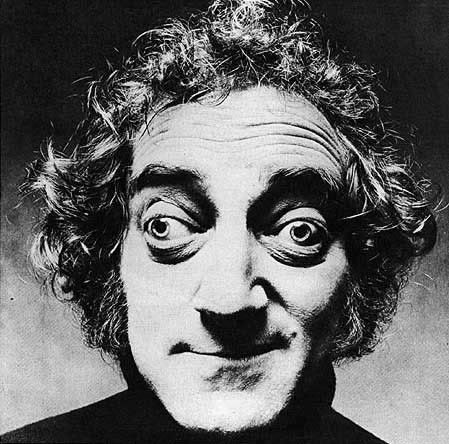
It also explains a lot of artistic and creative design choices. If we didn't perceive Michelangelo's David to be symmetrical, we might not be quite as fascinated by his beauty. Imagine David with a scrawny arm, or eyes like Marty Feldman. You can't because it ruins the perfection we associate with that work. The glorious iPhone is shaped to symmetric delight, as are most of Apple's award-winning designs. Even looking around my desk, the lovelier items are designed with a sense of symmetry. SIGG water bottle, Swingline stapler, desk lamp.
The point here is that to make a design choice which is asymmetrical is one that can be used very effectively. But I believe it is counter-natural. Meaning, beauty is typically found in perceived symmetry. However, what what would Marilyn Monroe's beautiful face be without that amazing mole on her lower left cheek? Or Van Gogh's single white iris in a field of blue. As Ed points out, "artificial things often become endearing in their asymmetry because they become less intimidating." A slight imperfection here or there gives something a touch of character, shows that there really is no such thing as perfection (as that's a subjective measure), and makes the object (or person) more human through its quality of being juuuuust off. And here, I'm thinking of the beautiful design of Karim Rashid's Yum Bowl, amongst others.
So, where are we left after all this? Without conclusion, I'm afraid, but with an interesting consideration of the notion of perception, and the unsatisfying concession that beauty truly is in the eye of the beholder. Even in a rear windshield.
Tuesday, December 11, 2007
Is Photography Dead?
Normally, I'm not a Newsweek guy, I'm a TIME guy. But on a long trip to Rutland, VT, I picked up a copy of the "other" news reader and other than discovering a heavy commitment to experts from Harvard every other page (there are other reputable Universities, folks), I was really taken by a smart, insightful article by Peter Plagens entitled, "Is Photography Dead?"In it, Plagens eloquently points out that the 21st century generation of photographers, for all their digital, Photoshopping, fabricated innovations and perfection have lost the honesty that the first photographers were able to capture using the medium. It's a great point. One that is linked to the controversial digital backlash. Is the world, in its pursuit of ease and technological advancement, becoming detrimentally removed from the idea of humanism? There is a fine line between social connectivity as we know it now and soulful, corporeal connection, or human to human contact.
"Digitalization has made much of art photography's vast variety possible. But it's also a major reason that, 25 years after the technology exploded what photography could do and be, the medium seems to have lost its soul. Film photography's artistic cachet was always that no matter how much darkroom fiddling someone added to a photograph, the picture was, at its core, a record of something real that occurred in front of the camera. A digital photograph, on the other hand, can be a Photoshop fairy tale, containing only a tiny trace of a small fragment of reality. By now, we've witnessed all the magical morphing and seen all the clever tricks that have turned so many photographers—formerly bearers of truth—into conjurers of fiction. It's hard to say "gee whiz" anymore."So what say you? Do we have the ability to capture truth anymore from this medium? Can we look to photographs to capture moments for us the way we once did, or have the expectations already been set that photography is now a manipulated rendering (sometimes remarkably so) of the vivid imagination of the photographer?
Labels:
design,
photography,
technology,
truth,
web
Monday, October 29, 2007
lovesong for the cassette
I was going through our storage locker a handful of weeks ago. Came across an old tape, a cassette to be painfully accurate. It was a live concert of my friend, Matt Trowbridge (formerly "Trowy", now Dr. Matthew Trowbridge) performing at Eddie's Attic in Decatur, GA. Back in the day, Dr. Trowbridge was a gifted singer/songwriter (I'm sure he still plays. I'm certain. Well, hopeful.) and at my insistence had given me a copy of this show he'd done. A relatively quick set of 7 or 8 songs, but it's gold. It's worth it just to listen to the earnestness of the introductions.
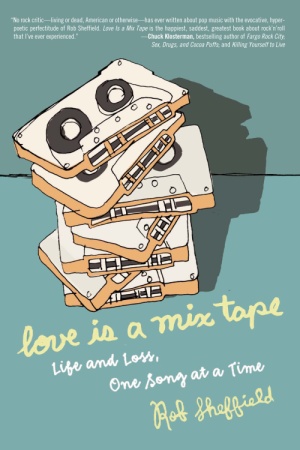
Anyway, I found the tape and have played it a number of times since its resurrection, but it got me thinking about the idea of tapes and specifically of "mixes" and the craft of making a great mix tape. In the iTuned mp3 world we live in now, making a mix tape requires almost nothing of the mixer. It's literally dragging tracks from a library to a folder and then fiddling with the order. But such was not the case 15 years ago, when putting together a tape for friends, or a girl, or as catharsis for yourself actually required commitment.
My process was (and still is to some degree) always the same. First of all, there was a need to understand the rules (spins on which can be found here and here). My rules are simple:
And it is with those things in mind that I make my list. I would go through all my tapes and 45s and make a giant list of all the tracks I loved for that mix, and note the speed (fast, slow, med) and play time when possible (you've got to be aware of what you can fit on one side of a 90 minute tape). Then you start planning possible playlists. Each side is its own playlist. Each side must be considered separately. The two sides should connect from the standpoint of mood, but it's like the band came back from a break and had to get the crowd from moment one again.
Again, contrast that to today when a decent playlist takes maybe a couple of hours. It's still fun, but not nearly as meaningful. The connection to the mix is gone. Not to the music, there's an important distinction. The music is still moving, engrossing, alive, but the time, the pain, the song that was longer than you thought and got cut off, the starting over, the ruined tape because somebody hit record, the hours of planning and planning and care...they are lost in the drag-and-click model - gone the way of the cassettes that get locked up in storage lockers and lost to garbage cans.
One step further would be to look at all artistic processes. The value is coming back around for artisans. A hand-made chest of drawers. Personally tailored clothing. Original pottery. Photos taken and framed by someone you know. These things have value not just because they are "one of a kind", but because being "one of a kind" usually means that somebody poured their heart, energy, and attention into the construction of that object. I think we need more of those. Lots more. It's worth the extra time.
Now, if we could only get it all to fit neatly on side B.
My process was (and still is to some degree) always the same. First of all, there was a need to understand the rules (spins on which can be found here and here). My rules are simple:
- no repeat artists - there's enough great music out there that you should never need to rely on one band twice per mix
- think about variety and experiential arc - I don't prescribe to fast fast fast. slow slow slow. I listen to the ending of one track before finalizing the next one. It's got to flow. That might mean strings to strings or drumbeat to drumbeat or it might be a HUGE wake-up after an earned moment of silence. It just has to feel right.
- stay away from compilations - they are for cheaters. no mixes should be stolen. Yes, the soundtrack to Garden State is great. But don't copy half the songs and give them to me as your thoughtful contribution.
- don't give up - if you're tired of the process, go do something else and then come back to it. It's an artistic process. It requires something of you. Push though it or know your limits, but don't just stop and don't just throw six Stevie Wonder tracks on the end because you know they're killer.
One step further would be to look at all artistic processes. The value is coming back around for artisans. A hand-made chest of drawers. Personally tailored clothing. Original pottery. Photos taken and framed by someone you know. These things have value not just because they are "one of a kind", but because being "one of a kind" usually means that somebody poured their heart, energy, and attention into the construction of that object. I think we need more of those. Lots more. It's worth the extra time.
Now, if we could only get it all to fit neatly on side B.
Labels:
creativity,
design,
inspiration,
intimacy,
mixtape,
technology,
truth,
web
Subscribe to:
Posts (Atom)
the thoughts and opinions expressed below are entirely my own, and are not necessarily shared by my friends, family, or employer. (though they very well might be...)