Showing posts with label truth. Show all posts

Monday, March 15, 2010

Drawing Inspiration

My family ordered pizza and watched "Up" last night. And yes, I continue to marvel at Pixar's technical innovation (how did they light that girl's room up like a kaleidoscope as the balloon-house rose above it?). I can't believe what I watched is animation. I simply refuse to believe it. My theory is that in addition to computer wizardry, there is a healthy dose of magic that is added in post-production and that is how the film turns out the way it does. It's just a theory.

But amazingly, I am more astonished by the aspect of this film that has nothing to do with computer animation or RenderMan technology. I think the true genius of this film (and, most of Pixar's offerings) comes through the storytelling.

"Up" is a clinic in taking a basic story idea and developing richness around it. The basic outline couldn't be simpler: From childhood, a man finds his perfect match. They love each other. They live a long, beautiful life together. But she dies before they can ever do the one big adventure they'd planned since they were children. In her absence, he feels the weight of her death at every moment. How does he move on?

That's where the genius of imagination creates depth and nuance and metaphor. It is the moment in the process in which the author stops thinking solely in linear waves, but in the abstract, in analogies and symbols, in the "what if" and limitless possibility. And in this part of the creative process, in which the expected and the familiar are gently set aside, true creation is allowed to play and breathe and lead and expand.

In "Up", the protagonist Carl's problem is the heaviness of age and adulthood, and so ironically his backstory is that he sells helium balloons - a lighter than air occupation that is entirely connected to the emotional nature of childhood. 

The writers have his dying wife giving him her “Adventure Book”. At a page labeled “Stuff I’ve done”, Carl (and the viewer) think that the rest of the book must be blank, because Carl has never had the courage to turn the page. And yet, at the critical moment toward the end, he turns the page only to discover that Ellie had placed pictures of their whole life together in that section – it wasn’t empty after all. The truth is that life with Carl was the adventure. That the “Stuff” they’d done together was the stuff of their own adventure. Their journey together was the story.

And, of course, there's the beautiful twist that our protagonist must literally let go of his house and possessions in order to move on living in the future. 

But I didn't intend this post to be about plot recap. More about taking a simply truthful story and allowing imagination and potential take it to places elaborate and undiscovered and unexpected. I am inspired to apply this to everything I touch. The question is: how? I see how this is the expectation for artists and writers, but can this be done in the planning world? Is there room for imaginative layer and abstract discovery and promoting the unexpected? What forms does that take? Is it in the brief? At the briefing? In a presentation? Pitching new business? Or only when a creative team shows the desire to go there? When is it appropriate? When is it not? Would a client go for the ride? Would a creative team? How is creative license and the spirit of inventiveness used for constructive positive outcomes vs distracting cleverness?

Inspiration can be a tricky proposition that comes with a lot of questions when a person seeks practical applications for it. But at the end of the day, if I'm not trying to tell a story that's never been told, I guess I think...what's the point? I think the gang at Pixar would agree.

Monday, October 12, 2009

Truth in Creativity, by Maurice Sendak


For those who don't know me, I have two kids: Sadie, 6, and Charlie, almost 3. We love reading. LOVE it. I will spare you the column-that-could-be about the very best in kid lit and instead give you my thoughts on the amazing rediscovery the world is having with the 1963 Maurice Sendak classic, Where the Wild Things Are.

First off, the film looks insanely delicious. God bless Spike Jonze and any other director who chooses costumes over CGI (also a column-that-could-be). But more importantly, the release of the film has given many of us dads a chance to dust off a copy of the book and share it with our kids with a bit more care - lingering over the illustrations, considering the simplicity of the words, and asking on each page, "what do you think Max is feeling here?"

This is what I love. In a 10 sentence book, Sendak nails childhood. I mean, NAILS it. Who hasn't felt angry and wild and filled with feelings that are too big for our bodies? And yes, yes of course "let[ting] the wild rumpus start." If for nothing else than for the magic of those three words. But clearly for reminding us of what it means to feel alone and isolated and wronged and the need to rebel.

But these days I find myself intrigued by the feelings of loneliness Max experiences when the rumpus is over and he wants to be "where someone loves him best of all." The part of the book most of us don't remember or consider. The time-to-go-home part. The part that completes Max's journey. The part that brings remorse and need and closure to the experience of being a kid.

This book is a study in truth expressed creatively. Find the truth of a human experience, (and not the kind of truth we Brand Strategists like to throw on a creative brief really quickly - you know, the daypart/website pattern/general-generational characteristics, but a real essential understanding of what it's like to be human - kids have big, wild feelings and need to get them out and then need to know that they can have those feelings and still be loved best of all) and then tell that story in a surprising, tender, delightful, and daringly original way.

It's what any creative endeavor should strive for, be it a book, song, painting, classroom lesson, brainstorming session, and, yes, advertising & marketing too.

So, thanks, Maurice Sendak. From my kids to my colleagues, thanks.

Tuesday, December 11, 2007

Is Photography Dead?

Normally, I'm not a Newsweek guy, I'm a TIME guy. But on a long trip to Rutland, VT, I picked up a copy of the "other" news reader and other than discovering a heavy commitment to experts from Harvard every other page (there are other reputable Universities, folks), I was really taken by a smart, insightful article by Peter Plagens entitled, "Is Photography Dead?"

In it, Plagens eloquently points out that the 21st century generation of photographers, for all their digital, Photoshopping, fabricated innovations and perfection have lost the honesty that the first photographers were able to capture using the medium. It's a great point. One that is linked to the controversial digital backlash. Is the world, in its pursuit of ease and technological advancement, becoming detrimentally removed from the idea of humanism? There is a fine line between social connectivity as we know it now and soulful, corporeal connection, or human to human contact.

Let me give one extended quote from the article:
"Digitalization has made much of art photography's vast variety possible. But it's also a major reason that, 25 years after the technology exploded what photography could do and be, the medium seems to have lost its soul. Film photography's artistic cachet was always that no matter how much darkroom fiddling someone added to a photograph, the picture was, at its core, a record of something real that occurred in front of the camera. A digital photograph, on the other hand, can be a Photoshop fairy tale, containing only a tiny trace of a small fragment of reality. By now, we've witnessed all the magical morphing and seen all the clever tricks that have turned so many photographers—formerly bearers of truth—into conjurers of fiction. It's hard to say "gee whiz" anymore."
So what say you? Do we have the ability to capture truth anymore from this medium? Can we look to photographs to capture moments for us the way we once did, or have the expectations already been set that photography is now a manipulated rendering (sometimes remarkably so) of the vivid imagination of the photographer?


Monday, October 29, 2007

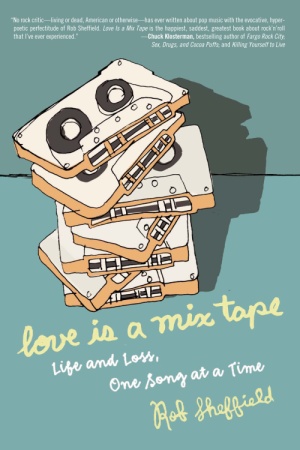
lovesong for the cassette

I was going through our storage locker a handful of weeks ago. Came across an old tape, a cassette to be painfully accurate. It was a live concert of my friend, Matt Trowbridge (formerly "Trowy", now Dr. Matthew Trowbridge) performing at Eddie's Attic in Decatur, GA. Back in the day, Dr. Trowbridge was a gifted singer/songwriter (I'm sure he still plays. I'm certain. Well, hopeful.) and at my insistence had given me a copy of this show he'd done. A relatively quick set of 7 or 8 songs, but it's gold. It's worth it just to listen to the earnestness of the introductions.

Anyway, I found the tape and have played it a number of times since its resurrection, but it got me thinking about the idea of tapes and specifically of "mixes" and the craft of making a great mix tape. In the iTuned mp3 world we live in now, making a mix tape requires almost nothing of the mixer. It's literally dragging tracks from a library to a folder and then fiddling with the order. But such was not the case 15 years ago, when putting together a tape for friends, or a girl, or as catharsis for yourself actually required commitment.

My process was (and still is to some degree) always the same. First of all, there was a need to understand the rules (spins on which can be found here and here). My rules are simple:
  1. no repeat artists - there's enough great music out there that you should never need to rely on one band twice per mix
  2. think about variety and experiential arc - I don't prescribe to fast fast fast. slow slow slow. I listen to the ending of one track before finalizing the next one. It's got to flow. That might mean strings to strings or drumbeat to drumbeat or it might be a HUGE wake-up after an earned moment of silence. It just has to feel right.
  3. stay away from compilations - they are for cheaters. no mixes should be stolen. Yes, the soundtrack to Garden State is great. But don't copy half the songs and give them to me as your thoughtful contribution.
  4. don't give up - if you're tired of the process, go do something else and then come back to it. It's an artistic process. It requires something of you. Push though it or know your limits, but don't just stop and don't just throw six Stevie Wonder tracks on the end because you know they're killer.
And it is with those things in mind that I make my list. I would go through all my tapes and 45s and make a giant list of all the tracks I loved for that mix, and note the speed (fast, slow, med) and play time when possible (you've got to be aware of what you can fit on one side of a 90 minute tape). Then you start planning possible playlists. Each side is its own playlist. Each side must be considered separately. The two sides should connect from the standpoint of mood, but it's like the band came back from a break and had to get the crowd from moment one again.


Again, contrast that to today when a decent playlist takes maybe a couple of hours. It's still fun, but not nearly as meaningful. The connection to the mix is gone. Not to the music, there's an important distinction. The music is still moving, engrossing, alive, but the time, the pain, the song that was longer than you thought and got cut off, the starting over, the ruined tape because somebody hit record, the hours of planning and planning and care...they are lost in the drag-and-click model - gone the way of the cassettes that get locked up in storage lockers and lost to garbage cans.

One step further would be to look at all artistic processes. The value is coming back around for artisans. A hand-made chest of drawers. Personally tailored clothing. Original pottery. Photos taken and framed by someone you know. These things have value not just because they are "one of a kind", but because being "one of a kind" usually means that somebody poured their heart, energy, and attention into the construction of that object. I think we need more of those. Lots more. It's worth the extra time.

Now, if we could only get it all to fit neatly on side B.

Tuesday, October 2, 2007

the power of the innocuous moment

Life can really be divided into two categories: the monumental and the innocuous.

Let me explain:

The moments of our lives are either ones that we will stamp as worth remembering, stories we'll share with other people, or times that will be photographed and put on our mantelpieces. They may range from your first kiss to a job promotion to the birth of your children. They are the glorious events that will forever go down in history as having a certain depth of value and meaning.

The other parts of our lives can be categorized as innocuous moments. That is, the insignificant, everyday points of time that make up the majority of our lives, but which, in hindsight, are utterly forgettable. I put a band-aid on a paper cut. I picked a pen from my desk drawer. I shaved.

Here's the interesting part. Despite the fact that we would all love to experience the thrills (or even intense lows) of the monumental moments of life, it is the innocuous moments of life that truly unite us. Who hasn't almost slipped on a patch of ice, (or on a slippery floor, or inside the shower) but caught themselves and then looked around to see if anyone was watching? Those "innocuous" moments connect us on a deeper level than the major life events.

For example, many people have had a wedding. If you tell someone you got married, they are excited for you. Perhaps it brings back memories of their own wedding. But it is the fact that you stood in the mirror retying your bow-tie over and over again that connects the two of you because that's human. It's the moment of fallibility. The moment of imperfection that creates the shared experience, not the event itself.

I was thinking about this idea with regards to advertising. I think advertising has an inverse relationship with life's "memorable vs. innocuous" moments. Simply put, the more "monumental" life's actual moments are represented/recreated through advertising, the less memorable it is in the consumers' eye. AND, the more "innocuous" the life moment, the greater the memorability when put into advertising.

I will offer these two car commercials. In the one, the landscape is sweeping, the road dramatically winding, the footage downright breathtaking. The boredom overwhelming. In the other, VW has literally filmed a series of life's forgettable moments and created an impactful, memorable advertisement.

Daewoo


VW


The idea is that we are, as a society, joined by these small moments of truth. Moments we don't think about at the time, but carry such emotional importance when we see them or hear them replayed by somebody else. It is the notion that we are not alone, that we all have to go through waiting for a bus, slipping through a closing door at the last second by "making ourselves super thin", or getting back the wrong change. It is by sharing the innocuous moments that we develop a sense of truth, compassion, and unity. Know what I mean?
the thoughts and opinions expressed below are entirely my own, and are not necessarily shared by my friends, family, or employer. (though they very well might be...)