Showing posts with label technology. Show all posts

Wednesday, June 24, 2009

Apple Calls it Quits (a "what if" exploration)


It is never a good sign when a blog entry begins with a disclaimer. And yet, I offer up the following: I am not a technologist, but I love technology. My wife and I still use our VCR (sometimes). My iPhone was a birthday present, but I almost cried when I dropped it within the first week of having it. I do not have HDTV. Clearly not an expert, I am, I’d say, an observer. A lite-social-networking, twittering, blogging, account planner. I like the conversation. I am fascinated more by the social implications of technology than by the wizardry of the mechanism. I offer this up as a canvas, a backdrop for the conversation I’m keen on having.

In the unlikely event you’ve been living on a planet other than ours for the past couple weeks, you will have undoubtedly been witness to the launch of the iPhone3Gs (the greatest, fastest, most powerful of the 3G's, now with cut and paste!). The frenzy this launch stirred amuses and confuses me. People were once again lined up, huffy and aggressive outside of Apple and AT&T stores for hours. I mean, like 12 hours or more. And others have been expressing for months their plans to get the new device right away. Give their first gen iPhone to the missus, to a kid, to eBay. It didn’t really matter, so long as there was a place for it to go to justify the new purchase.

But as I sat there, with my own suddenly ancient piece of handheld networking iCapability, I wondered, what if the folks at Apple just closed their doors? What if Steve Jobs pulled a Wonka, and just…no more. Aside from the obvious economic ramifications (unemployment, the cost of switching various hardwares) and the disappointment of MacJunkies like myself who will miss out on new designs, and the feeling of “us” that comes with aligning yourself with this anti-PC community. Also, let’s limit this to personal technologies so that the discussion doesn’t meander into the need for medical advancements or better aviation. If we’re just talking about our everyday, humdrum hardware needs and usage, I wonder what we’d be missing. Aren’t our computers fast enough? Can’t we find what we hope to find? Don’t we have enough access? Enough games? Couldn’t we conceivably have full, prosperous, connected lives if personal technologies did not advance beyond this point?

I know Ray Kurzweil's answer. Help me out here, followers of Singularity. What would the argument be? That it is inevitable that technology must continue, must advance because the merging of humanity and machinery will bring about our best-self evolution. But I’m posing what if we put on the brakes at this point? What if we stop now?

What if we thought more about Sherry Turkle’s approach? What if we question what the relationships people are developing with technology? Turkle argues that:

Our new intimacies with our machines create a world where it makes sense to speak of a new state of the self. When someone says, 'I'm on my cell,' 'online,' 'on instant messaging,' or 'on the web,' these phrases suggest a new placement of the subject, a subject wired into social existence through technology, a tethered self. I think of tethering as the way we connect to always-on communication devices and to the people and things we reach through them.

Wow. Look at the big brain on Brett! (aside: I am fully prepared to be schooled on both Kurzweil and Turkle. I don’t mean in any way to dumb down or reduce their thinking. Both are worth studying and understanding in any way possible.) The truth is I wonder if we need new technologies to continue driving us toward a new kind of connection. Some would argue that the new connectivity exchanges human contact for honest conversation. That although we don’t see one another, we feel more free to express our truest thoughts, to let our id run free, to say what’s really on our minds because it’s not really us, it’s our online selves. The converse to that is that people need to learn to interact eye to eye. That our humanness is critical to our survival as a species. What I’m asking is shouldn’t we work on learning to make direct, personal, actual human connections, decisions, negotiations before lining up to get the next gadget that will do it all for us? It’s like Jeff Goldblum’s Dr. Ian Malcolm says in Jurassic Park: “Yeah, but your scientists were so preoccupied with whether or not they could, they didn't stop to think if they should.”

Now the twist. Although it seems I’m arguing against the development of more technology, I am more trying to start a dialogue. Keep in mind, I love my laptop, my iPhone, the ability to text. To tweet. To post to tumblr. To videochat my wife and two kids from the road. To cleverly update my status on facebook. And so on. So, talk to me. Tell me. Instruct me. I could use it. I’m earnestly inquiring as to what we’d be missing if we could pause personal technology development at this point in time and make due with where we’ve arrived.

Friday, January 4, 2008

ringing in the new year

I've been thinking about this post for a while now. As a bus rider, I have had many of my favorite observations on the daily commute, be it to or fro. A few weeks ago, a cell phone rang on the way in to work, and despite my best efforts, I couldn't help but to play name that tune. It was, after a couple of bars, unmistakably the strains of that classic Hall and Oates' ditty, "Private Eyes". Do not misunderstand me, I actually have H&O Greatest Hits album, "Rock n' Soul" in my iTunes library, so I do not question their musicianship, nor their appropriate place in pop history. It is what happened next that is the basis for this entry.

The woman, scrambled to find the source of the melody, pained look on her face, hoping to end the embarrassment of her song selection in this most public and judgmental of forums. With much ado, she found the phone in her warehouse of a purse and stopped the ringtone.

My question is: if she was going to suffer such shame over the audio selection, why did she pick it in the first place? And she is not alone. I have seen this phenomenon countless times, yes on the bus, but also at work, coffeehouses, and other public spaces. People expressing externally the internal groan of "yes, that's really the song I picked for my ringtone."

Which begs the further question: is your ringtone a reflection of who you are, who you believe yourself to be, or who you'd like the world to perceive you to be? For some, a ringtone is what it is meant to be, a way to indicate you have a phone call. BUT, if you're going to customize your cell's sound functions, then you've obviously made the very conscious, very self-aware decision that your ringtone means something just a bit more. So, why pick something which will elicit anything less than joy and/or pride when it rings? If the woman had smiled at the Hall and Oates song, or given it an extra beat before turning it off, I'd have thought to myself, "that's pretty damn cool." Instead, I joined her in her emotional self-flagellation, and thought quite simply: "lame."

On a larger scale, so many products and services tout the idea of "customization" or "make it your own" and I think, as a citizenry, we are delighted to seize our own uniqueness where we can, thrilled to finally be supported, not ridiculed, when we order things "on the side" (or whatever might be the applicable "my way" form or functionality). However, the system fails us if we don't pick things honestly. Or, perhaps it's not about honesty, it's about comfort. Or perhaps it is neither, but rather, recognizing the platform of our customization, and having the wherewithal to discern said platform's availability to public scrutiny. Any way you slice it, it boils down to being true to yourself in life's decisions. (someone call Bill Shakespeare, there's something in that) Even the little ones.

P.S.: my ringer is set to Dave Brubeck's "Blue Rondo a la Turk". I'm not entirely sure what that says about me when folks here it ring, but I'll tell ya, it's a great song from a great album, and I tend to let it ring just a little longer than I should when someone calls. Just in case anyone's listening.

Tuesday, December 11, 2007

Is Photography Dead?

Normally, I'm not a Newsweek guy, I'm a TIME guy. But on a long trip to Rutland, VT, I picked up a copy of the "other" news reader and other than discovering a heavy commitment to experts from Harvard every other page (there are other reputable Universities, folks), I was really taken by a smart, insightful article by Peter Plagens entitled, "Is Photography Dead?"

In it, Plagens eloquently points out that the 21st century generation of photographers, for all their digital, Photoshopping, fabricated innovations and perfection have lost the honesty that the first photographers were able to capture using the medium. It's a great point. One that is linked to the controversial digital backlash. Is the world, in its pursuit of ease and technological advancement, becoming detrimentally removed from the idea of humanism? There is a fine line between social connectivity as we know it now and soulful, corporeal connection, or human to human contact.

Let me give one extended quote from the article:
"Digitalization has made much of art photography's vast variety possible. But it's also a major reason that, 25 years after the technology exploded what photography could do and be, the medium seems to have lost its soul. Film photography's artistic cachet was always that no matter how much darkroom fiddling someone added to a photograph, the picture was, at its core, a record of something real that occurred in front of the camera. A digital photograph, on the other hand, can be a Photoshop fairy tale, containing only a tiny trace of a small fragment of reality. By now, we've witnessed all the magical morphing and seen all the clever tricks that have turned so many photographers—formerly bearers of truth—into conjurers of fiction. It's hard to say "gee whiz" anymore."
So what say you? Do we have the ability to capture truth anymore from this medium? Can we look to photographs to capture moments for us the way we once did, or have the expectations already been set that photography is now a manipulated rendering (sometimes remarkably so) of the vivid imagination of the photographer?


Monday, October 29, 2007

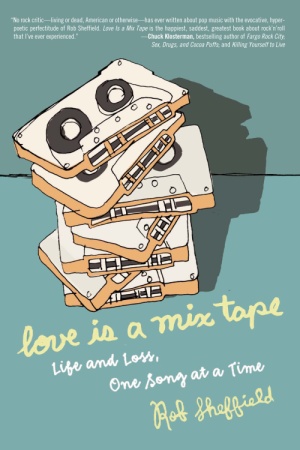
lovesong for the cassette

I was going through our storage locker a handful of weeks ago. Came across an old tape, a cassette to be painfully accurate. It was a live concert of my friend, Matt Trowbridge (formerly "Trowy", now Dr. Matthew Trowbridge) performing at Eddie's Attic in Decatur, GA. Back in the day, Dr. Trowbridge was a gifted singer/songwriter (I'm sure he still plays. I'm certain. Well, hopeful.) and at my insistence had given me a copy of this show he'd done. A relatively quick set of 7 or 8 songs, but it's gold. It's worth it just to listen to the earnestness of the introductions.

Anyway, I found the tape and have played it a number of times since its resurrection, but it got me thinking about the idea of tapes and specifically of "mixes" and the craft of making a great mix tape. In the iTuned mp3 world we live in now, making a mix tape requires almost nothing of the mixer. It's literally dragging tracks from a library to a folder and then fiddling with the order. But such was not the case 15 years ago, when putting together a tape for friends, or a girl, or as catharsis for yourself actually required commitment.

My process was (and still is to some degree) always the same. First of all, there was a need to understand the rules (spins on which can be found here and here). My rules are simple:
  1. no repeat artists - there's enough great music out there that you should never need to rely on one band twice per mix
  2. think about variety and experiential arc - I don't prescribe to fast fast fast. slow slow slow. I listen to the ending of one track before finalizing the next one. It's got to flow. That might mean strings to strings or drumbeat to drumbeat or it might be a HUGE wake-up after an earned moment of silence. It just has to feel right.
  3. stay away from compilations - they are for cheaters. no mixes should be stolen. Yes, the soundtrack to Garden State is great. But don't copy half the songs and give them to me as your thoughtful contribution.
  4. don't give up - if you're tired of the process, go do something else and then come back to it. It's an artistic process. It requires something of you. Push though it or know your limits, but don't just stop and don't just throw six Stevie Wonder tracks on the end because you know they're killer.
And it is with those things in mind that I make my list. I would go through all my tapes and 45s and make a giant list of all the tracks I loved for that mix, and note the speed (fast, slow, med) and play time when possible (you've got to be aware of what you can fit on one side of a 90 minute tape). Then you start planning possible playlists. Each side is its own playlist. Each side must be considered separately. The two sides should connect from the standpoint of mood, but it's like the band came back from a break and had to get the crowd from moment one again.


Again, contrast that to today when a decent playlist takes maybe a couple of hours. It's still fun, but not nearly as meaningful. The connection to the mix is gone. Not to the music, there's an important distinction. The music is still moving, engrossing, alive, but the time, the pain, the song that was longer than you thought and got cut off, the starting over, the ruined tape because somebody hit record, the hours of planning and planning and care...they are lost in the drag-and-click model - gone the way of the cassettes that get locked up in storage lockers and lost to garbage cans.

One step further would be to look at all artistic processes. The value is coming back around for artisans. A hand-made chest of drawers. Personally tailored clothing. Original pottery. Photos taken and framed by someone you know. These things have value not just because they are "one of a kind", but because being "one of a kind" usually means that somebody poured their heart, energy, and attention into the construction of that object. I think we need more of those. Lots more. It's worth the extra time.

Now, if we could only get it all to fit neatly on side B.
the thoughts and opinions expressed below are entirely my own, and are not necessarily shared by my friends, family, or employer. (though they very well might be...)