I run into a problem every now and again. Like many of you with kids, despite an incalculable amount of toys, every so often my children sit among the puzzles, dolls, balls, trucks, beads, books, and art supplies and complain that they have nothing to do. At my worst, I tell them if they don't think they've got enough stuff, I can make space for new stuff simply by throwing out or selling the current crop. But at my best, I call in my wife who changes out the baskets of "things" for toys, games, paper and markers, etc. that have been hiding in closets for months, just waiting for their big moment in the rotation to come out and be used again. The idea is so simple, but it comes from watching our kids' preschool teacher put out new and interesting things for the kids to come up and play with on a daily basis. Each day, a new set of interesting things to touch, consider, explore, try, and engage with.
You see where this is going, right?
Today, in discussing a next wave scope of work, a client of ours laid out clear objectives of: getting people to return to our site multiple times and to increase the amount of time they spend on the site with each visit. There's certainly nothing remotely wrong with that goal on the surface. Who wouldn't want to strive for that? It's a cool, informative side married to a fun idea and campaign. But it wasn't designed with Preschool Considerations, if you know what I mean. Which is to say, it was conceived to entertain and inform not to change shape on a daily basis.
But the truth is, if the hope is to get users to come, stay, and return, we must concept the work with that teacher mentality - introducing new pieces, featuring engaging content, creating unexpected and exceptional experiences and tools, etc. I know this is old news in this here digital world, but I find myself fascinated by the overlap of how people create engaging content and contexts for a specific target simply by bringing the shiny stuff out of the closet with some consistency and frequency. It doesn't matter if your world is hi-tech or analog, if you want someone to come back and stay, you've got to give them something new.
Showing posts with label web. Show all posts
Wednesday, March 17, 2010
Monday, October 19, 2009
Social Singularity
Over a year ago, I made the very purposeful decision to take the twitter application off of my facebook profile (this was before "selective twitter" was up and running). I was noticing that there were things I wanted to say to my twitter followers that made sense to them and to that medium that the old friends, family, and grad school crowd wouldn't find relevant or even make sense. Though it felt odd at first, I came to the conclusion that I wanted to keep those worlds separate. That people who knew the way I was currently thinking (as a brand strategist and pseudo-cultural anthropologist) were all captured on one medium while those with whom I relate to in a different (though no less authentic way) I was connected to on another medium. Not exclusively, of course, but separate to some extent.
And for a while, this plan worked very well.
Recently, my brother started a twitter account. I was amazed, excited, and then alarmed. Last night, my wife and I talked about her entrance into the blogosphere as an aspiring novelist, and the various ways to get connected and to promote her books and build a community. And lo, the conversation included some overlap into the distinct worlds I had created for myself. Today, a friend from grad school started following my tweets. The fastest growing demographic segment on Facebook are women over 55. The norm is now that your parents are on the same platforms as you, sending you links, "liking" your status updates, commenting on your posts, and re-tweeting your insights and confessions.
We knew that this, like all trends, was inevitable. That was the whole idea behind it, right? The Influencers and their trickle-down technologies eventually must either move on to a different, less crowded space, or concede that those circles of distinction must at some point become crowded to the point where all personal networks are populated by the people from previously separated spheres of your life.
This convergence of the members of disparate real life and/or digital circles is known as Social Singularity.
The implications of this go hand-in-hand with the past decade's obsession with the notion of the "democratization of exclusivity" or "massclusivity". When we all have access, various things happen. Innovation and evolution become necessary as new platforms are born and grow. The heavily populated social spaces either lose their appeal, or evolve into hubs of active, though uncontrollable communications (see: YouTube & the gross increase of Twitter spam). And most importantly, in a very positive way, the newcomers to the digital social space make the space a more viable place to develop new means of contact and community, as there becomes less education and dispelling necessary when people jump in and experience things for themselves.
Labels:
connections,
generations,
identity,
inclusion,
singularity,
social networks,
social singularity,
web
Thursday, December 4, 2008
...and while you're at it, create the next facebook, ok?
Another request came in from a client to create "viral videos" for them. Am I the only one in the world wide web of advertising to secretly roll their eyes at this request?
That's not entirely fair. I know what they're after. We all do. In every marketing department's vision, they create quirky web content that gets passed around the net and tallies a million hits before the sun rises the day after. But, for every Prop 8 - The Musical or Kobe jumping the Aston Martin, well-financed, professionally filmed and edited videos, there are 100 undiscovered gems like "One Line on the Sopranos" which explode due to their sheer creativity, audacity, or idiocy.
I guess what I'm getting at is that much as we'd love to accept the notion that with the mere instruction of making a viral video, we can actually create one. What we can do is build some online content. And yes, it could be a video. And yes, we'll probably make it funny. Will it be sliced bread? Probably not. Will people talk about it? Some will. Maybe a lot will. But once again, marketers are fooling themselves into thinking that control is their own when it comes to the internet.
I love viral videos. I have a tendency to laugh out loud (sorry. to lol) from my desk. There's a group of friends I share my favorite discoveries with. And THAT's what viral means. It means that we pass things around to a group who, in turn, pass them on to more people. Much like...wait for it...a virus. But from a marketing/advertising standpoint, they are one option. They certainly aren't the only option, and aren't always the best one when they're picked. At the end of the day, a great idea is a great idea. If people respond to it by sharing it, that's wonderful. But let's be careful what we, as advertisers, put within a scope of work, and let's be careful marketing departments that if we ask for a presence on the web, we understand that we will be playing by the rules of its democracy, that we can't dictate what becomes the vid du jour. If we could, we'd never have been able to predict or explain The Zombie Boy who loves turtles, Benny Lava or the Dramatic Chipmunk.
Tuesday, August 26, 2008
on the concept of Intimacy - (part 3)
Initially, I proposed the use of the term “intimacy” to describe digital connectedness to a roomful of my colleagues. “Why not ‘friendship’, ‘rapport’ or ‘togetherness’?” they asked. I think that what I observe to exist in the online world is the search for something of a kind of closeness that is a level deeper than simple affinity. Intimacy may not be what is commonly achieved in the digital world, but I think it is what is sought.Certainly for some, the desire remains to be a collector of sorts. The goal in these cases is built on discovering how many friends or followers or connections (or whatever the appropriate platform vernacular might be) one can obtain. That’s always been my hang up with MySpace – it always felt like volume was the driver. It didn’t seem to mimic my own reality of finding a smaller group of people that was predicated on shared commonalities. That in real life (using the term relatively), humans strive to find intimacy – close familiarity that reaches beyond facial identification, name recall, or the automatic, empty exchange of head nods and how-do-you-do’s in a workplace hallway.
I was unashamedly in a men’s a cappella group in college, the Tufts Beelzebubs. I describe these people as my brothers, even today. We were notoriously close. When asked what the difference was between my Bub brethren and the campus fraternity scene, I was struck at the obviousness of the answer. We were brought together for a common purpose – we all believe in fun through song. We weren’t just seeking out quantity of connections, we were limited in capacity, but the depth of connection increased exponentially because of a shared purpose, interest, and idea (that and khakis, jackets and ties).
The phenomenon of intimacy in the digital space works, I believe in much the same way. People using the social web have a deep need to create profound personal connections with their communities based on a handful of drivers: likeminded thinking, shared content, musical tastes, or common experiences. It is when online social selves are allowed the opportunity to discover what their web counterparts are all about that they actually create a deep connective bond. An intimacy. This is why I have fallen so hard for Twitter. I have found a group of people that I follow based on watching them think their thoughts “out loud”, and then decide whom I’d like to reach out to because I think we share a sense of humor, a perspective on the industry, a political viewpoint, a common ground. It is (again) why some sites don’t offer much beyond a means of finding old friends or collecting a digital Rolodex. This concept has been discussed here and there online, but I had a great discussion about it with @abfdc and @tfrommer, which was captured nicely (and thankfully not as verbosely as I clearly would have done it) here.As we create new social platforms, sites, and online communities, I think we will find that the most successful ones of the lot are the ones that encourage and enable the opportunity to discover each other as similarly as we do in the analog world – as beings with nuanced thoughts, sensibilities and tastes seeking intimacy with others who offer complementary qualities, beliefs and purposes.
This is already too long, but I wanted to make mention of tangential thinking that relates to the topic of intimacy of this kind.
Illusion
Just as we can find great connections with likeminded folks online, it would be impossible to have this discussion without recognizing the antithetical at play here. For as much as there’s depth of intimacy to be found online, there is without a doubt a major amount of illusion at play as well. The truth is, despite the great democratization of voice the Internet enables, we still create a hierarchical, celebrity-system of digital personalities. Within that mistaken fantasy that we’ve all got the same sized digital megaphone, lies the difficulty that - with such ease of access comes an assumed closeness where there probably isn’t one. The open entry to our digital heroes via blog comment pages, online forums, or yes, my vaunted Twitter, create the illusion of connection, of intimacy. We believe that in that comment/exchange/response that we are securing the attentions and affections of other members of this online tribe, when the reality is that it is often much more fleeting than that, and as with all things, time and consistency remain the best indicators of the truest connections.Another part of that illusion of intimacy is expressed through a certain amount of voyeurism. We feel that we know certain personalities so we like to watch the tête-à-tête, the back and forth of witty barbs. There’s a safety in just watching from a safe distance as people engage in one-upmanship and juicy banter. We’re not a part of the conversation (or maybe we dare to engage here and there), but the digital world allows us to be privy to whichever intimacies we stumble upon that day.
Closeness in the comments space (or, anonymity-enabled honesty)
Michael Wesch points this out in his wonderful address to the Library of Congress, but it truly is fascinating. The most interesting dialogue happening online is often found in the comments section after an article or blog entry. Most interesting or most degenerative? I’m not sure which is more consistently accurate. Sadly, my best guess is the latter. But the point is in watching how base feelings become quickly escalated and expressed in these end sections of a webpage. And yes, Wesch specifically calls out the common radical insult escalation game that gets played out, but I think there’s an implied intimacy here as well. One that allows a person to be as explicit as he or she chooses, with whatever degree of force or opinion they wish, with virtually no repercussion to deal with (perhaps an incoming barrage of assaulting messages). It is fascinating however, to consider the boldness that is found online. I link this with a different kind of intimacy, but a form of intimacy nonetheless. This one isn’t seeking connection, it is an intimacy of allowance, of emboldened spirits based on the closeness the Internet affords.
If you’re still here, I love ya. Thanks for hearing me out. As always, I’m looking for your reactions, additions, and corrections. Agree or disagree, my guess is that we’ve shared something here. Haven’t we?
Tuesday, August 12, 2008
on the concept of Identity - (part 2)
...as opposed to persona
The important role of identity in the social network space seems obvious and unquestionable. Who we are, who others perceive us to be, how we want others to perceive us, how we want to perceive ourselves. There is a hinge, it seems, on the role of perception. And a spectrum of truth against which that perception is focused. Much has been written about online identities. Most eloquently might be Diana Kimball's take on it:
The first part observes that it is our leave-behinds that define who we are. The moments of "check this out" or "some pics I found". It leaves me to wonder if we actively construct our online selves, or if identity is a by-product of engagement. Before responding to that, we must decide if we either buy into the idea that a person's first engagement in the digital social space is done purposefully or casually. Do people enter onto (let's say) facebook in a state of apathy, daring the online world to show them what's out there, or is there some intention around joining/signing up? If the latter is true, which I presume it is - at least for those who stick with whatever platform they've chosen, we have to believe that with intention comes awareness. And within awareness we find identity.
It is this awareness that leads to Ms. Kimball's last sentence:
Our self-awareness leads directly to how we present ourselves. I surmise that many start off trying to play a persona that is carefully constructed. Online, anything is possible. It's the neoclassic image of a person using false representations of themselves to appear more attractive on that great bastion of truth, the online dating site. Because somewhere in our minds, in our egos, perhaps in our most frustrated and desperate selves, we believe that the internet will allow us, will afford us the opportunity to become better than we think of our current self-assessment. But the key element in the construction of a social identity is time.
I think we grow into our authenticity. I think time is the great seeker in the game of identity hide and seek. It will always find us. We might begin our venture into the social networking world with the idea that we will become someone or something we wish for ourselves. But the more time we spend online, the more messages we write, pictures we share, dialogs we have, comments we make, the greater the chance that our true selves take over where the guise of a persona falters. The more we become certain of ourselves as individuals, the easier it becomes to maintain consistency of character. Or the more of our true feelings, thoughts, beliefs, and opinions become revealed to the communities we enter.
So where does that leave us? Have I talked in circles here? I often do. It's part of what makes me Me. I think the final thought on identity at this point is that identity is not something we construct. It is something that emerges organically the more time we spend engaging in social spheres, be they digital or analog.
The important role of identity in the social network space seems obvious and unquestionable. Who we are, who others perceive us to be, how we want others to perceive us, how we want to perceive ourselves. There is a hinge, it seems, on the role of perception. And a spectrum of truth against which that perception is focused. Much has been written about online identities. Most eloquently might be Diana Kimball's take on it: We build up our personal online identities, in large part, through the detritus we automatically leave behind: pictures we wanted others to see, articles we wanted others to read. Online identity is a very weird idea. It hinges on faith in honesty: if identity implies authenticity, then the information that helps to construct it cannot be false. But online identities are definitely constructed in other ways. They constitute the internet’s built environment: the structures we can see and study, and whose construction we can interrogate for meaning and consequence. These structures are in some ways completely under the owner’s control, and in others complete out of it.There is a lot to take in here. I encourage you to re-read the quote.
The first part observes that it is our leave-behinds that define who we are. The moments of "check this out" or "some pics I found". It leaves me to wonder if we actively construct our online selves, or if identity is a by-product of engagement. Before responding to that, we must decide if we either buy into the idea that a person's first engagement in the digital social space is done purposefully or casually. Do people enter onto (let's say) facebook in a state of apathy, daring the online world to show them what's out there, or is there some intention around joining/signing up? If the latter is true, which I presume it is - at least for those who stick with whatever platform they've chosen, we have to believe that with intention comes awareness. And within awareness we find identity.
It is this awareness that leads to Ms. Kimball's last sentence:
These structures are in some ways completely under the owner’s control, and in others complete out of it.
Our self-awareness leads directly to how we present ourselves. I surmise that many start off trying to play a persona that is carefully constructed. Online, anything is possible. It's the neoclassic image of a person using false representations of themselves to appear more attractive on that great bastion of truth, the online dating site. Because somewhere in our minds, in our egos, perhaps in our most frustrated and desperate selves, we believe that the internet will allow us, will afford us the opportunity to become better than we think of our current self-assessment. But the key element in the construction of a social identity is time.I think we grow into our authenticity. I think time is the great seeker in the game of identity hide and seek. It will always find us. We might begin our venture into the social networking world with the idea that we will become someone or something we wish for ourselves. But the more time we spend online, the more messages we write, pictures we share, dialogs we have, comments we make, the greater the chance that our true selves take over where the guise of a persona falters. The more we become certain of ourselves as individuals, the easier it becomes to maintain consistency of character. Or the more of our true feelings, thoughts, beliefs, and opinions become revealed to the communities we enter.
So where does that leave us? Have I talked in circles here? I often do. It's part of what makes me Me. I think the final thought on identity at this point is that identity is not something we construct. It is something that emerges organically the more time we spend engaging in social spheres, be they digital or analog.
Thursday, August 7, 2008
The Social Surrogate Theory - (part 1)
...in which I pose the general hypothesis

I was inspired by Michael Wesch's ethnographic introduction to the Library of Congress (thanks for sending it around, Piers). Inspired, that is, to do a little more thinking out loud about social networks and why they matter so much in our society. I'm working on a hypothesis. I haven't quite reached the crux of what I'm searching for, but I feel I'm close.
I pose this idea, knowing that others have probably written multiple dissertations on the subject, not to mention books, blogs, and blah blah blah... If you're one of those people, my interest in the analog social impact of digital social networks is earnest. I'm open to references to read, conflicting points of view, research that already exists, and even an old fashioned "why don't you leave this to the experts" smackdown.
Here's the basic premise:
My intention is to break down the thematic pillars of what social networking provides in parallel to the human experience. The next handful of entries will look at these, one theme at a time. My working list considers the concepts of: identity, immediacy, intimacy, possibility, advocacy, community, democracy, control, escape, and enjoyment.
As always, feel free to jump in and add direction, notes, your thinking, questions, or better insights.

I was inspired by Michael Wesch's ethnographic introduction to the Library of Congress (thanks for sending it around, Piers). Inspired, that is, to do a little more thinking out loud about social networks and why they matter so much in our society. I'm working on a hypothesis. I haven't quite reached the crux of what I'm searching for, but I feel I'm close.
I pose this idea, knowing that others have probably written multiple dissertations on the subject, not to mention books, blogs, and blah blah blah... If you're one of those people, my interest in the analog social impact of digital social networks is earnest. I'm open to references to read, conflicting points of view, research that already exists, and even an old fashioned "why don't you leave this to the experts" smackdown.
Here's the basic premise:
- Social networks are a surrogate means of making authentic connections with other people. They are the natural outcome of a world with a dramatic reliance on machines and technology. As society moves into this culture of "togetherness through isolation", social networks are an enabling force that provide a simulation of the rich physical forms of human connection that we have lost our ability to cultivate through direct means.
My intention is to break down the thematic pillars of what social networking provides in parallel to the human experience. The next handful of entries will look at these, one theme at a time. My working list considers the concepts of: identity, immediacy, intimacy, possibility, advocacy, community, democracy, control, escape, and enjoyment.
As always, feel free to jump in and add direction, notes, your thinking, questions, or better insights.
Wednesday, June 25, 2008
if a tree Twitters in the woods…
The combination of a great discussion the other day and my multiple explanations to creatives and clients alike to led me back to the question “why Twitter”?Let the record show from the outset that when it comes to twittering, I’m all for it. I’ll tweet everything from my whereabouts to the inane to the cryptic. You can follow me here. But why? To what end?
I’ve been describing to the uninitiated (or semi-familiar) that Twitter is the best of the 4 worlds of: SMS (for the purpose of conversation), blogging (for the provision of intriguing content), social networking (for the inclusion of community), and most importantly, IM (for the immediacy). Without any one of these, Twitter would not be as important or impactful. Add in the constraint of messaging in 140 words or less, and you’ve got yourself a fun little gaming in the mix as well.
In my conversation with Ray, I asked, “if the idea is just to tell a close group of friends what you’re up to, why not send out an email? Isn’t the group communication function already covered?” What we realized is that there is an important element of voyeurism to Twitter that may be secondary, but is critical. There is a sense that somebody might hear my words, or might respond, or might (gulp) follow me. But then that last part is nullified by vast number of Twitterers who, like a teen newly exploring MySpace, is more interested in collecting people than actually listening to them. Which is valid, I suppose. I try not judge, although for the record, I don’t understand the practice. It seems pointless. (But, this is coming from the guy who stood in line for 12 hours when Tim Burton’s Batman opened, wearing a Joker T-shirt and getting upset that it had been spilled on. So my credibility rating on why teens do what they do is probably zero.)
The point is this: there is a part of the act of twittering that is a bit desperate, isn’t there? The kind of “somebody pay attention to me!” whining or “know it all-ness/my opinion matters” that nobody liked when we were kids. Which isn’t to say many comments aren’t interesting, but if I was to step back from it, I’m not really convinced that anybody really cares that my kids are still awake, or that I’m sitting in an aisle seat today, or that KEXP’s live streaming is piss poor. So there’s absolutely a part of me that uses Twitter for the hope of acceptance. That one of the tastemakers might single out one of my tweets and choose to comment back with an “@mrgingold blah blah blah me too blah blah blah good one, dude blah blah blah”.Which brings us to another social ramification of Twitter that I find fascinating. Supposedly, in the not-to-long-ago, we went through a big social trend of Curator-ism. You know what I’m talking about, it was the Oprah phenomenon. The phenomenon that we hold people up in our society and look to them to help us choose what products, services, and people we should be purchasing, using, or supporting. But the Millennium was supposedly an end of that time, a welcoming of self-selection. The “iEra” in which I would pick for myself what, when, who, where, and how.
But Twittering is revealing itself to be more of the same Curator-ism, in a digital medium. We have our @PSFKs, @armano’s, @heyitsnoah’s that we follow and look to. These are the people we hope will notice our own tweets and comment or reply. They are the social media Oprahs. We look for their acceptance and are tickled at their recognition. Maybe this is just me. Maybe what I’ve done is revealed my own insecurities and shortcomings. My own small, sad need to be heard or singled out or told “that was what I was thinking too” by the people whose opinions I respect. If that’s the case, and I’m alone in this, I may have to reassess why I Twitter and blog. But I think there may be a handful of you out there who have a similar hope. Different “@_____” perhaps, but the same endgame.And that is the beauty of Twitter. While I could never in a million years get Oprah to hear my voice, it’s possible to speak directly to anybody who Twitters. The medium is being used the way it’s meant to be used – as a great democratizer of opinions and thoughts. Nobody might care to reply, but when you put your 140 words or less out there, there’s the distinct possibility that somebody somewhere might connect with what you have to say.
And so I leave you with the thought: "now's a good time for coffee and caloric pastries". Care to reply?
once more unto the breach, dear friends
once more.
i've decided to give the hogwash one more go. i'm feeling a little like my blogging experiment has mostly been just for me and can't decide if it's self-indulgent, self-delusional, self-serving, or just undiscovered.
whatever it's been, i've admittedly been three kinds of sucky when it comes to consistency. and so, as i approach my bloggiversary, i'm going to give it one more try for some healthy blog activity.
if you've been reading, i appreciate it. wish me luck. feel free to comment openly.
Friday, April 4, 2008
you've been pownced
Had a good conversation with friends today. We were discussing the role of connections via social networking sites. The sheer number of networks that have come and gone, or come and don't get used or come and get used and get lost... it's insane. I had postulated that although I "belong" to a number of these networks, when it comes down to it, I only use three.One is for networking. I build as many connections as I can, I welcome all who find me there.
One is for connecting. I get in touch with old acquaintances, stay in touch with friends, and am careful who I invite within that domain.
One is for dialogue. Spontaneous thoughts, insights, and delights.
And yet, I, like many, am a marked man. Discovered by a friend of a friend of my friend and now they want nothing more than to be connected. But to what end? To take an extra space in a list of names? To have a profile picture collecting virtual dust on my personal page? My hang up with MySpace (for me) was that it was all about numbers. So concerned with how many. It felt entirely pointless. Not everyone approaches it that way, but it feels embedded in the MySpace culture. So, when, say... Ed Cramley, who graduated high school 3 years after I did finds me and wants to be pals, I draw a line. Which is rude, isn't it? What harm would it be to have Ed listed amongst my friends? Well it feels entirely insincere to have Ed's picture listed amongst my "friends". I didn't know him a decade ago, I don't know him today... people aren't for collecting. So I ignore the invitation. Repeatedly, if necessary. Which, again, doesn't do much as far as building karma points.
So we came up with a plan today. A widget or app needs to be built (I'm nominating Phil) that acts as both a personal firewall and a social re-router. It needs to look at the spam-friends (those like Ed Cramley who serve no real purpose in my life at all) and filter them out, rather than rudely, to one of the other dozen social networks that I joined when I was trying them all on for size, and invites Ed Cramley to be my friend over there.
It's a kind of gentle breakup instead of a harsh "no thanks". A kind of deprioritization of social networks. I don't want you near my facebook account, so I'll re-route you to be "friends" with me over on Plaxo Pulse. Everyone happy? Perfect.
Hang on, I just got a reply from someone I haven't been in touch with from undergrad...sonuvabitch...I've just been Y!Mashed.
Tuesday, December 11, 2007
Is Photography Dead?
Normally, I'm not a Newsweek guy, I'm a TIME guy. But on a long trip to Rutland, VT, I picked up a copy of the "other" news reader and other than discovering a heavy commitment to experts from Harvard every other page (there are other reputable Universities, folks), I was really taken by a smart, insightful article by Peter Plagens entitled, "Is Photography Dead?"In it, Plagens eloquently points out that the 21st century generation of photographers, for all their digital, Photoshopping, fabricated innovations and perfection have lost the honesty that the first photographers were able to capture using the medium. It's a great point. One that is linked to the controversial digital backlash. Is the world, in its pursuit of ease and technological advancement, becoming detrimentally removed from the idea of humanism? There is a fine line between social connectivity as we know it now and soulful, corporeal connection, or human to human contact.
"Digitalization has made much of art photography's vast variety possible. But it's also a major reason that, 25 years after the technology exploded what photography could do and be, the medium seems to have lost its soul. Film photography's artistic cachet was always that no matter how much darkroom fiddling someone added to a photograph, the picture was, at its core, a record of something real that occurred in front of the camera. A digital photograph, on the other hand, can be a Photoshop fairy tale, containing only a tiny trace of a small fragment of reality. By now, we've witnessed all the magical morphing and seen all the clever tricks that have turned so many photographers—formerly bearers of truth—into conjurers of fiction. It's hard to say "gee whiz" anymore."So what say you? Do we have the ability to capture truth anymore from this medium? Can we look to photographs to capture moments for us the way we once did, or have the expectations already been set that photography is now a manipulated rendering (sometimes remarkably so) of the vivid imagination of the photographer?
Labels:
design,
photography,
technology,
truth,
web
Monday, October 29, 2007
lovesong for the cassette
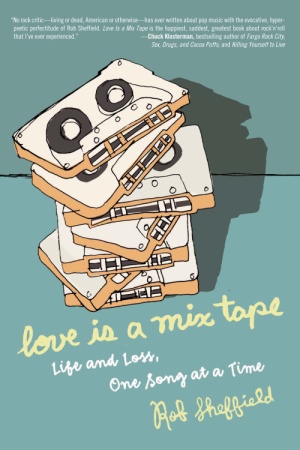
I was going through our storage locker a handful of weeks ago. Came across an old tape, a cassette to be painfully accurate. It was a live concert of my friend, Matt Trowbridge (formerly "Trowy", now Dr. Matthew Trowbridge) performing at Eddie's Attic in Decatur, GA. Back in the day, Dr. Trowbridge was a gifted singer/songwriter (I'm sure he still plays. I'm certain. Well, hopeful.) and at my insistence had given me a copy of this show he'd done. A relatively quick set of 7 or 8 songs, but it's gold. It's worth it just to listen to the earnestness of the introductions.
Anyway, I found the tape and have played it a number of times since its resurrection, but it got me thinking about the idea of tapes and specifically of "mixes" and the craft of making a great mix tape. In the iTuned mp3 world we live in now, making a mix tape requires almost nothing of the mixer. It's literally dragging tracks from a library to a folder and then fiddling with the order. But such was not the case 15 years ago, when putting together a tape for friends, or a girl, or as catharsis for yourself actually required commitment.
My process was (and still is to some degree) always the same. First of all, there was a need to understand the rules (spins on which can be found here and here). My rules are simple:
And it is with those things in mind that I make my list. I would go through all my tapes and 45s and make a giant list of all the tracks I loved for that mix, and note the speed (fast, slow, med) and play time when possible (you've got to be aware of what you can fit on one side of a 90 minute tape). Then you start planning possible playlists. Each side is its own playlist. Each side must be considered separately. The two sides should connect from the standpoint of mood, but it's like the band came back from a break and had to get the crowd from moment one again.
Again, contrast that to today when a decent playlist takes maybe a couple of hours. It's still fun, but not nearly as meaningful. The connection to the mix is gone. Not to the music, there's an important distinction. The music is still moving, engrossing, alive, but the time, the pain, the song that was longer than you thought and got cut off, the starting over, the ruined tape because somebody hit record, the hours of planning and planning and care...they are lost in the drag-and-click model - gone the way of the cassettes that get locked up in storage lockers and lost to garbage cans.
One step further would be to look at all artistic processes. The value is coming back around for artisans. A hand-made chest of drawers. Personally tailored clothing. Original pottery. Photos taken and framed by someone you know. These things have value not just because they are "one of a kind", but because being "one of a kind" usually means that somebody poured their heart, energy, and attention into the construction of that object. I think we need more of those. Lots more. It's worth the extra time.
Now, if we could only get it all to fit neatly on side B.
My process was (and still is to some degree) always the same. First of all, there was a need to understand the rules (spins on which can be found here and here). My rules are simple:
- no repeat artists - there's enough great music out there that you should never need to rely on one band twice per mix
- think about variety and experiential arc - I don't prescribe to fast fast fast. slow slow slow. I listen to the ending of one track before finalizing the next one. It's got to flow. That might mean strings to strings or drumbeat to drumbeat or it might be a HUGE wake-up after an earned moment of silence. It just has to feel right.
- stay away from compilations - they are for cheaters. no mixes should be stolen. Yes, the soundtrack to Garden State is great. But don't copy half the songs and give them to me as your thoughtful contribution.
- don't give up - if you're tired of the process, go do something else and then come back to it. It's an artistic process. It requires something of you. Push though it or know your limits, but don't just stop and don't just throw six Stevie Wonder tracks on the end because you know they're killer.
One step further would be to look at all artistic processes. The value is coming back around for artisans. A hand-made chest of drawers. Personally tailored clothing. Original pottery. Photos taken and framed by someone you know. These things have value not just because they are "one of a kind", but because being "one of a kind" usually means that somebody poured their heart, energy, and attention into the construction of that object. I think we need more of those. Lots more. It's worth the extra time.
Now, if we could only get it all to fit neatly on side B.
Labels:
creativity,
design,
inspiration,
intimacy,
mixtape,
technology,
truth,
web
Monday, August 20, 2007
Making friends the old fashioned way
The debate continues as to which is the more effective way of meeting real friends. The (wildly oversimplified) 2.0 model is that I create my profile, look for other people with similar tags, view their profile and commit with a "poke" or an "invite" or whatever the site's technical term is. Alongside the active seeking is the promise that others are doing the same thing and that hopefully we'll meet somewhere in the middle because we both like DIY projects and The Shins second album. I have made some acquaintances this way, been introduced to a few people, mostly to their catchy, clever nicknames, but sometimes to an actual person, a photo they use to represent themselves in the best possible way and, of course, the list of personal beliefs, faves, etc.Sunday I was at a baby shower. A real one, not virtual or nuthin'. The host family's husband and I struck up a conversation, and wouldn't you know it, Bill (that's his real name) and I laughed, joked, shared concerns about raising kids, sustained uncomfortable pauses, and downed a beer or two. Time passed quickly and we set up the promise to get our families together for dinner without an event attached. All in all, I'd say a solid connection. I only lament that this doesn't happen very often.
So, herein lies the cryptic quandary. Is there a preferred method of actual (dare I use the term out of its 21st century iteration) "social networking"? Is there greater promise to link yourself in to somebody else, to have the Amazon algorithm let you know that people who like Jack and Megan also like..., or to wait it out in hopes of meeting Bill, sharing a beer and laughter without emoticons or acronyms. The smart money is on the technology. Mine's on reality.
Increasingly I find myself longing for real experiences. The further we get engulfed and embedded in advancement, the less I feel connected, (though the more I am). BUT, I wonder if there is room, space, or logic in the idea of making friends the old fashioned way. I'm all for helping someone build a deck and discovering we share the same interests, but the infrequency at which that happens is far from my 21st century liking. I'd rather have the depth of connection at the speed of a tweet. The paradox is both frustrating and understandable. If Ray Kurzweil is to believed, and singularity is inevitable, is it just a matter of time before the overlap takes place? Or will we deliberately regress and learn to value the arts of writing a letter (yes, with a pen and paper! a what?!?!?!), holding a conversation, throwing a dinner party? I don't know.
But the deeper I become entrenched in my self-selected online universe, the more I long for something real and old-fashioned. Slow, inconsistent, unpredictable, but real.
Subscribe to:
Posts (Atom)
the thoughts and opinions expressed below are entirely my own, and are not necessarily shared by my friends, family, or employer. (though they very well might be...)