Friday, January 4, 2008

ringing in the new year

I've been thinking about this post for a while now. As a bus rider, I have had many of my favorite observations on the daily commute, be it to or fro. A few weeks ago, a cell phone rang on the way in to work, and despite my best efforts, I couldn't help but to play name that tune. It was, after a couple of bars, unmistakably the strains of that classic Hall and Oates' ditty, "Private Eyes". Do not misunderstand me, I actually have H&O Greatest Hits album, "Rock n' Soul" in my iTunes library, so I do not question their musicianship, nor their appropriate place in pop history. It is what happened next that is the basis for this entry.

The woman, scrambled to find the source of the melody, pained look on her face, hoping to end the embarrassment of her song selection in this most public and judgmental of forums. With much ado, she found the phone in her warehouse of a purse and stopped the ringtone.

My question is: if she was going to suffer such shame over the audio selection, why did she pick it in the first place? And she is not alone. I have seen this phenomenon countless times, yes on the bus, but also at work, coffeehouses, and other public spaces. People expressing externally the internal groan of "yes, that's really the song I picked for my ringtone."

Which begs the further question: is your ringtone a reflection of who you are, who you believe yourself to be, or who you'd like the world to perceive you to be? For some, a ringtone is what it is meant to be, a way to indicate you have a phone call. BUT, if you're going to customize your cell's sound functions, then you've obviously made the very conscious, very self-aware decision that your ringtone means something just a bit more. So, why pick something which will elicit anything less than joy and/or pride when it rings? If the woman had smiled at the Hall and Oates song, or given it an extra beat before turning it off, I'd have thought to myself, "that's pretty damn cool." Instead, I joined her in her emotional self-flagellation, and thought quite simply: "lame."

On a larger scale, so many products and services tout the idea of "customization" or "make it your own" and I think, as a citizenry, we are delighted to seize our own uniqueness where we can, thrilled to finally be supported, not ridiculed, when we order things "on the side" (or whatever might be the applicable "my way" form or functionality). However, the system fails us if we don't pick things honestly. Or, perhaps it's not about honesty, it's about comfort. Or perhaps it is neither, but rather, recognizing the platform of our customization, and having the wherewithal to discern said platform's availability to public scrutiny. Any way you slice it, it boils down to being true to yourself in life's decisions. (someone call Bill Shakespeare, there's something in that) Even the little ones.

P.S.: my ringer is set to Dave Brubeck's "Blue Rondo a la Turk". I'm not entirely sure what that says about me when folks here it ring, but I'll tell ya, it's a great song from a great album, and I tend to let it ring just a little longer than I should when someone calls. Just in case anyone's listening.

Wednesday, December 19, 2007

Impact vs. Inclusion

So, I've recently been hearing this phrase bouncing around our truly brilliant media department: Impact Media. It's not that I don't like the phrase, I do. It's very hip sounding. Easy to glom onto. Here's the problem. I don't agree with it. I know that in the world of advertising we are always tasked with "breaking through", with "having an impact". Some agencies refer to this as "disruptive media".

This past year, in order to promote McDonald's iced coffee, our creative team put to-go mugs reading "cold is coming" inside ice blocks and in the wee small hours of the morning left them in the middle of downtown Seattle. Very cool. The press picked this up (of course), people walked around them, took pictures, etc. Was this guerrilla tactic "impact media"? I think it qualifies based on my loose understanding of the jargon.

But the problem comes with the encouragement of all teams to come up with "impact" tactics. I think there's an opportunity missed. Maybe it's just semantics, but I think rather than coming up with ideas that shock and awe, we should be creating ideas that delight and surprise (endless praise & big thanks, Bruce Mau). I think we should be encouraging our creative teams to discover ways of making citizens (note: not consumers) want to be part of the experience. And I don't mean by "opting-in" to email bombardment. I mean getting people to want to find your product or service, and hunger to be a part of it. Experientially. Sensorily. As Mike Murphy from Facebook said at APG, "don't be disruptive, be inclusive."

Lastly, I think inclusivity is the tactic most overlooked and misunderstood by creative and media (and yes, absolutely, positively) planning departments. I believe if we're defining new media, we mustn't forget that the key element to the way people engage with the world feeds off of the notion of personal choice and high personal stakes. Not in a superficial "what's in it for me?" way, but in a way that clearly reaches out to the values and behaviors that are important to the engaged citizen. Remember that aside from its current online implication, the word "interactive" means creating a give and take, communicative relationship between user and product. A two-way street if you will that goes beyond making an impact, it creates a relationship, a bond. We should aim for tactics and experiences that don't just "wow" people, but ones that ask for their participation (be it to touch, watch, share, taste...). Calling all advertisers, calling all clients: Now is the time for Inclusive Media.

Tuesday, December 11, 2007

Is Photography Dead?

Normally, I'm not a Newsweek guy, I'm a TIME guy. But on a long trip to Rutland, VT, I picked up a copy of the "other" news reader and other than discovering a heavy commitment to experts from Harvard every other page (there are other reputable Universities, folks), I was really taken by a smart, insightful article by Peter Plagens entitled, "Is Photography Dead?"

In it, Plagens eloquently points out that the 21st century generation of photographers, for all their digital, Photoshopping, fabricated innovations and perfection have lost the honesty that the first photographers were able to capture using the medium. It's a great point. One that is linked to the controversial digital backlash. Is the world, in its pursuit of ease and technological advancement, becoming detrimentally removed from the idea of humanism? There is a fine line between social connectivity as we know it now and soulful, corporeal connection, or human to human contact.

Let me give one extended quote from the article:
"Digitalization has made much of art photography's vast variety possible. But it's also a major reason that, 25 years after the technology exploded what photography could do and be, the medium seems to have lost its soul. Film photography's artistic cachet was always that no matter how much darkroom fiddling someone added to a photograph, the picture was, at its core, a record of something real that occurred in front of the camera. A digital photograph, on the other hand, can be a Photoshop fairy tale, containing only a tiny trace of a small fragment of reality. By now, we've witnessed all the magical morphing and seen all the clever tricks that have turned so many photographers—formerly bearers of truth—into conjurers of fiction. It's hard to say "gee whiz" anymore."
So what say you? Do we have the ability to capture truth anymore from this medium? Can we look to photographs to capture moments for us the way we once did, or have the expectations already been set that photography is now a manipulated rendering (sometimes remarkably so) of the vivid imagination of the photographer?


me and Malcolm are back in action


(crickets chirping. chirping.)

Yes, much like Malcolm Gladwell, I am back from having taken a bit of a hiatus from the ol' blog. The main differences are listed below:

1) I was not working on a new book. He was.
2) Many eager thought leaders rejoiced over his triumphant return. My blog has had a total of 3 comments.
3) Gladwell is fun to say. Gingold is gutteral and could potentially hurt a dry throat.

Regardless of these minor differences, the Hogwash will flow once again. Be prepared and enjoy.

Monday, October 29, 2007

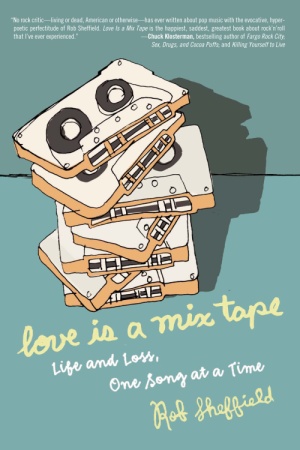
lovesong for the cassette

I was going through our storage locker a handful of weeks ago. Came across an old tape, a cassette to be painfully accurate. It was a live concert of my friend, Matt Trowbridge (formerly "Trowy", now Dr. Matthew Trowbridge) performing at Eddie's Attic in Decatur, GA. Back in the day, Dr. Trowbridge was a gifted singer/songwriter (I'm sure he still plays. I'm certain. Well, hopeful.) and at my insistence had given me a copy of this show he'd done. A relatively quick set of 7 or 8 songs, but it's gold. It's worth it just to listen to the earnestness of the introductions.

Anyway, I found the tape and have played it a number of times since its resurrection, but it got me thinking about the idea of tapes and specifically of "mixes" and the craft of making a great mix tape. In the iTuned mp3 world we live in now, making a mix tape requires almost nothing of the mixer. It's literally dragging tracks from a library to a folder and then fiddling with the order. But such was not the case 15 years ago, when putting together a tape for friends, or a girl, or as catharsis for yourself actually required commitment.

My process was (and still is to some degree) always the same. First of all, there was a need to understand the rules (spins on which can be found here and here). My rules are simple:
  1. no repeat artists - there's enough great music out there that you should never need to rely on one band twice per mix
  2. think about variety and experiential arc - I don't prescribe to fast fast fast. slow slow slow. I listen to the ending of one track before finalizing the next one. It's got to flow. That might mean strings to strings or drumbeat to drumbeat or it might be a HUGE wake-up after an earned moment of silence. It just has to feel right.
  3. stay away from compilations - they are for cheaters. no mixes should be stolen. Yes, the soundtrack to Garden State is great. But don't copy half the songs and give them to me as your thoughtful contribution.
  4. don't give up - if you're tired of the process, go do something else and then come back to it. It's an artistic process. It requires something of you. Push though it or know your limits, but don't just stop and don't just throw six Stevie Wonder tracks on the end because you know they're killer.
And it is with those things in mind that I make my list. I would go through all my tapes and 45s and make a giant list of all the tracks I loved for that mix, and note the speed (fast, slow, med) and play time when possible (you've got to be aware of what you can fit on one side of a 90 minute tape). Then you start planning possible playlists. Each side is its own playlist. Each side must be considered separately. The two sides should connect from the standpoint of mood, but it's like the band came back from a break and had to get the crowd from moment one again.


Again, contrast that to today when a decent playlist takes maybe a couple of hours. It's still fun, but not nearly as meaningful. The connection to the mix is gone. Not to the music, there's an important distinction. The music is still moving, engrossing, alive, but the time, the pain, the song that was longer than you thought and got cut off, the starting over, the ruined tape because somebody hit record, the hours of planning and planning and care...they are lost in the drag-and-click model - gone the way of the cassettes that get locked up in storage lockers and lost to garbage cans.

One step further would be to look at all artistic processes. The value is coming back around for artisans. A hand-made chest of drawers. Personally tailored clothing. Original pottery. Photos taken and framed by someone you know. These things have value not just because they are "one of a kind", but because being "one of a kind" usually means that somebody poured their heart, energy, and attention into the construction of that object. I think we need more of those. Lots more. It's worth the extra time.

Now, if we could only get it all to fit neatly on side B.

Monday, October 22, 2007

"J" Joe Jeans and his Jellybeans

Watched a Sesame Street alphabet video with my 4 year old this weekend. I haven't stopped singing this little ditty since.

I have long been obsessed with the genius of Jim Henson. On college entrance essays he was consistently included within my responses to: "who you'd invite to dinner/who would you like to meet living, dead, or fictional"? As I watch this video now, the power of it hits me on a handful of levels.

Level One: nostalgia. I'll tell you there's just something about the quality of those voices. It's like coming home. Voices that change only very slightly regardless of the muppet they're representing. Those are the voices of my childhood. It doesn't take much to put me back in front of the television as a 6 year old in our old house on Sycamore Terrace.

Level Two: staying power. This video is from 1971. My daughter is watching it for the first time and loves it. The song literally transcends time. Like much of Henson's work, although appearing (and musically being rooted) within its distinct decade, the heart, the lesson, the crux of what's on display is absolutely timeless.

Level Three: talk to kids/talk to adults. Long before the Simpsons and Family Guy laid claim to the notion of appealing to kids through the medium (cartoons or puppets) while appealing to adults through the subtlety of the writing, Sesame Street and the Muppet Show were all over this. I laugh at an aside Grover throws away in one sketch and the kids laugh because the bald blue dude with the mustache can't get the "numero dos" without it spilling on the floor of the restaurant during the musical number "Granada".

Level Four: education. I am most inspired by the fact that this creativity was all developed in the name of education. As my daughter logically guesses that some words start with "G" rather than "J" (which both have the same phonetic root), I take comfort in "J-Jane jumping down the lane" singing a song about "J".

I guess what it boils down to is my admiration for the ability to use artistry for a greater purpose than selling something. Be it education, green technology, cultural innovation, or social connectivity. Every once in a while something comes along to remind you that once upon a time, someone just got it right.

Wednesday, October 17, 2007

Offsetting Innovation

An AdAge video promotes the partnership between Brooklyn Brothers and the Versus TV cable network as being "pioneers" for developing a software program that allows them to track how much tonage of carbon emissions they use on a commercial shoot. The tonage is then offset with a purchase of (I'm guessing here) RECs (or, renewable energy credits).

This is a tricky subject. On the one hand, I applaud the idea of offsets. I am thankful that the desire here with Brooklyn Brothers, Versus TV, and ERM (the London-based enviro-engineering company that helped develop the software) is to take ownership and responsibility of their impact on the environment and, ostensibly, to do something about it.

However, carbon offsets are slowly becoming the e-z pass to corporate guiltlessness. It's like deciding the leaking roof is fixed by putting a bucket underneath the spill rather than fixing the roof.

True innovation would have been to partner not with a software company, but with a hardware company. Instead of figuring out how they could "neutralize" their carbon impact, why not work with someone to develop a camera, an editing suite, heck, how about a food services refrigerator, all that run off of an easily renewable energy source? NOW you've got me standing up and applauding and saying "pioneer".

Again, I preface this by saying that I think the idea of purchasing various offsets is at least a step in the right direction. I think it enables a person to make a gesture of taking responsibility for their (generally unwanted but necessary) eco-unfriendly actions (taking a plane, running exorbitant amounts of energy, etc.). But, I think with the amount of money, power, and leading-edge thinking out there, I think companies should be looking to do more than be able to lay their guilt aside at night. I think it's all too easy for major corporations with large factories or other significant emissions-producing workshops to buy their way to surface-level ecofriendliness.

Where are the leaders? Where are the risk-takers? Where are the dreamers? Build us a better filter, a better smokestack, a better generator, a water-based engine. Partner with those doing this work. Yes, yes, plant trees. Of course. Support solar and wind energies. Do the things that offset the world's emissions. But start making tangible, physical changes in your own backyards. THAT's the kind of pioneering I'm looking for. That would be noteworthy, new, daring, exciting, and dare I say, creative.
the thoughts and opinions expressed below are entirely my own, and are not necessarily shared by my friends, family, or employer. (though they very well might be...)